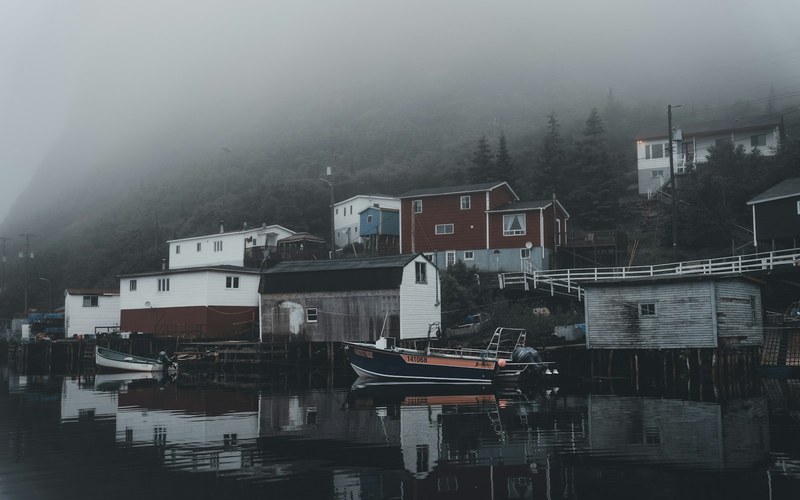
"Atmospheric" is one of those compliments romance readers reach for when they want to say something is working without being able to fully explain why. The review says "so atmospheric" and the person reading it understands this as high praise, and also can't quite pin down what it means in practical terms.
Let me try to make it precise.
Atmospheric romance is a category of romance novel in which the setting functions as emotional infrastructure — not backdrop, not texture, but something the whole story runs through. The world shapes the characters, primes the reader, and generates tension before anyone has said or done anything. You feel where you are before you understand what's at stake. And what you feel sets the emotional terms for everything that follows.
That's the working definition. Here's what it looks like in practice.
What Is Atmospheric Romance (A Definition That Actually Helps)
Every novel has a setting. Atmospheric romance is different because in these books, the setting is doing active work.
In a contemporary romance set in a city, the city is typically where the story happens. It might shape logistics — they keep running into each other at the same coffee shop, the rooftop garden matters for the ending — but it doesn't generate mood. You could move the story to a different city without changing the emotional architecture.
In an atmospheric romance, you couldn't. Take the moors out of a gothic novel and you've removed the point. Take the fog off the harbor and you've changed the emotional premise of every scene that happens there. The setting generates a specific feeling — dread, beauty, immersion, secrecy, constraint — that the story runs through rather than just occupying.
This is what "setting as character" actually means: the location has emotional logic that acts on the people in it.
A city says: this is where people make things and want things and move fast. A beach says: this is where people relax and permission loosens. A fog-lit harbor at 2am says: this is where secrets live. Where things are moved in the dark. Where the official account and the real account are two different documents, and someone has been paid to keep only one of them.
That last setting is the container for my series The Harbor of Secrets, which is why I have strong opinions about what atmospheric romance actually does.
The Difference Between Gothic and Atmospheric
Gothic and atmospheric overlap, but they're not the same thing, and the distinction matters because readers searching for one sometimes accidentally avoid the other.
Gothic romance has specific furniture: the grand house with its secrets, the ghost or its equivalent, the heroine in danger from a domestic source, supernatural or quasi-supernatural threat, and a logic of revelation — the horror beneath the surface. Rebecca is gothic. Jane Eyre is gothic. The pleasure of gothic is partly architectural: you're waiting for the house to show you what it's been hiding.
Atmospheric romance borrows gothic's emotional register without necessarily inheriting its machinery. You can have fog and dread and morally complicated characters and setting that presses on people psychologically without requiring a haunted house or a Victorian-era revelation. Coastal atmospheric romance uses the sea's emotional logic — enormity, weather, tides, things carried in by water and things drowned by it — without requiring anything supernatural.
The simplest distinction: gothic tends toward revelation (what is hidden beneath the surface?), while atmospheric tends toward immersion (what does it feel like to be here?). Both can be present in the same book, but they're answering different questions.
Right now, the gothic revival is pulling readers toward the atmospheric lane along with it. The Wuthering Heights adaptation buzz, the retellings circulating on BookTok, the gothic-adjacent literary renaissance — all of these are sending readers looking for the emotional register of gothic without necessarily wanting every book to be a traditional gothic novel. Atmospheric romance is where many of them are landing.
What Setting Does When It's Working
The argument for atmospheric romance is really an argument about reader psychology.
Readers arrive at page one in a certain emotional state. The first few pages of any book are doing preparatory work: calibrating the reader's nervous system, establishing tone, teaching them how to read this particular story. Most contemporary romance does this through character voice — you're in a protagonist's head immediately, and their internal commentary sets the terms.
Atmospheric romance does it through place first. You feel the world before you meet the character, and the world tells you what kind of story you're in.
This is efficient in a specific way. A fog-lit harbor at low tide communicates: secrecy, beauty, danger at the edges, things not quite visible. You don't need to be told these things. You arrive already primed for them. When the morally gray hero shows up, he fits into a world you're already feeling rather than a world you're still calibrating.
The other thing setting does, in atmospheric romance specifically, is generate tension without requiring plot. A lot of contemporary romance requires something to happen to create unease — a misunderstanding, a discovery, a confrontation. Atmospheric romance can generate unease through description alone. The harbor at night is tense before anyone has done anything wrong. That background pressure means the reader is already leaning forward before the first narrative complication.
This is why atmospheric romance pairs naturally with slow burn. When setting is doing emotional work, you have more narrative room. The story doesn't have to move quickly to feel like it's doing something. You can let scenes develop slowly because the world itself is generating a kind of pressure that keeps the reader engaged.
Why Harbor and Coastal Romances Dominate Right Now
Coastal settings currently outsell other small-town romance settings roughly 3:1, and the numbers are higher still when you separate out harbor-town specifically. The BookTok vocabulary for these books keeps returning to the same words: "immersive," "atmospheric," "feels like you're actually there," "the kind of book where you can smell the salt air."
That's not an arbitrary preference. It's readers responding to something the sea does consistently that other settings don't.
The sea communicates enormity. You can't control it, you can't fully know it, and anything that happens near it is happening against that scale. A couple in conflict at a harbor has a backdrop that implicitly measures the stakes: these aren't small problems. The world is large and indifferent and these two people are trying to find something in it.
The sea also communicates secrecy. Things get lost in it. Things get moved across it at night. The harbor specifically is the interface between what can be said and what has to happen quietly — it's where the official record (the customs house, the ledger, the bill of lading) meets everything that actually happened (what came in under cover of darkness, what the ledger doesn't say, who was paid to look the other way). That tension between official account and real account is intrinsic to the setting. You don't have to build it. It's already there.
Finally, the sea communicates time. Tides, seasons, the slow arc of ships coming and going — water settings exist in a kind of geological patience that makes the human drama inside them feel appropriately weighted. The things that happen in a harbor-town romance feel like they matter because they're happening against something very old and very slow.
Atmospheric Romance Recommendations (Organized by Mood)
If you want full gothic — revelation and dread:
Rebecca by Daphne du Maurier remains the template. If you haven't read it, there's nothing quite like it for understanding what it means when a house is a character. For something more recent, Joanna Margaret's essay on the gothic revival at CrimeReads is a good map of where the current wave is going.
If you want coastal slow burn — secrets, morally gray, earned HEA:
The Smuggler's Ledger (Remy Fontaine). I'll be direct about the self-inclusion. Harborstone, a New England harbor town in the age of sail; a captain framed for smuggling by the men who run the port, and the bookkeeper who notices the numbers don't add up. The setting does the work before the first scene asks it to. The slow burn is long and the obstacle is structural: the charge is a hanging offense, and she's going to find the truth. Complete HEA, no cliffhanger. The series is six interconnected standalones — each book a complete story, each couple their own arc, full resolution every time.
If you want historical atmosphere and a morally gray hero:
Lord of Scoundrels by Loretta Chase (1995, reissued constantly). Thirty years in print for good reason. The hero is genuinely dangerous and the book takes that seriously. The setting isn't coastal, but the atmosphere is meticulous and the character work is the standard everything else is measured against.
If you want contemporary atmospheric:
People We Meet on Vacation by Emily Henry uses summer and travel in ways that function atmospherically — the places are doing emotional work. It's a different register than historical harbor gothic, but the underlying principle is the same.
If you want gothic-adjacent dark romance, current:
The femgore and gothic-slasher wave has produced genuinely good work on the atmospheric end. Look for books where the darkness is the emotional mechanism rather than accumulated shock imagery. There's a real distinction, and readers have been making it clearly in recommendation threads this week.
Where Atmospheric Romance Is Heading in 2026
The numbers suggest the gothic/atmospheric revival has structural support, not just trend energy. Adaptations (Wuthering Heights, the Bridgerton run, the upcoming fall period-romance season with Sense and Sensibility in October) are reliably sending readers into the atmospheric lane. Coastal settings are outselling other small-town romance at a ratio that suggests something deeper than seasonal preference. And the vocabulary readers are developing for discovery — "atmospheric," "morally gray," "slow burn," "setting as character" — is stabilizing into actual search behavior.
Atmospheric romance is becoming a discoverable category rather than just a compliment reviewers apply. Readers are searching for it by name. They're building recommendation threads around it. They're developing the vocabulary to describe what they want before they've found the book that delivers it.
For a genre category that was, six months ago, mostly described by adjacency ("it's kind of gothic, sort of historical, very moody"), that's significant. The category is becoming legible — which is good news if you've been writing it before it had a name.
If you're looking for the foggy-harbor, morally-gray-hero, slow-burn version of this moment: The Harbor of Secrets series is six interconnected standalones, each a complete HEA, no cliffhangers. The Smuggler's Ledger is the entry point. The harbor is waiting.
→ Find it here: The Smuggler's Ledger on Amazon